
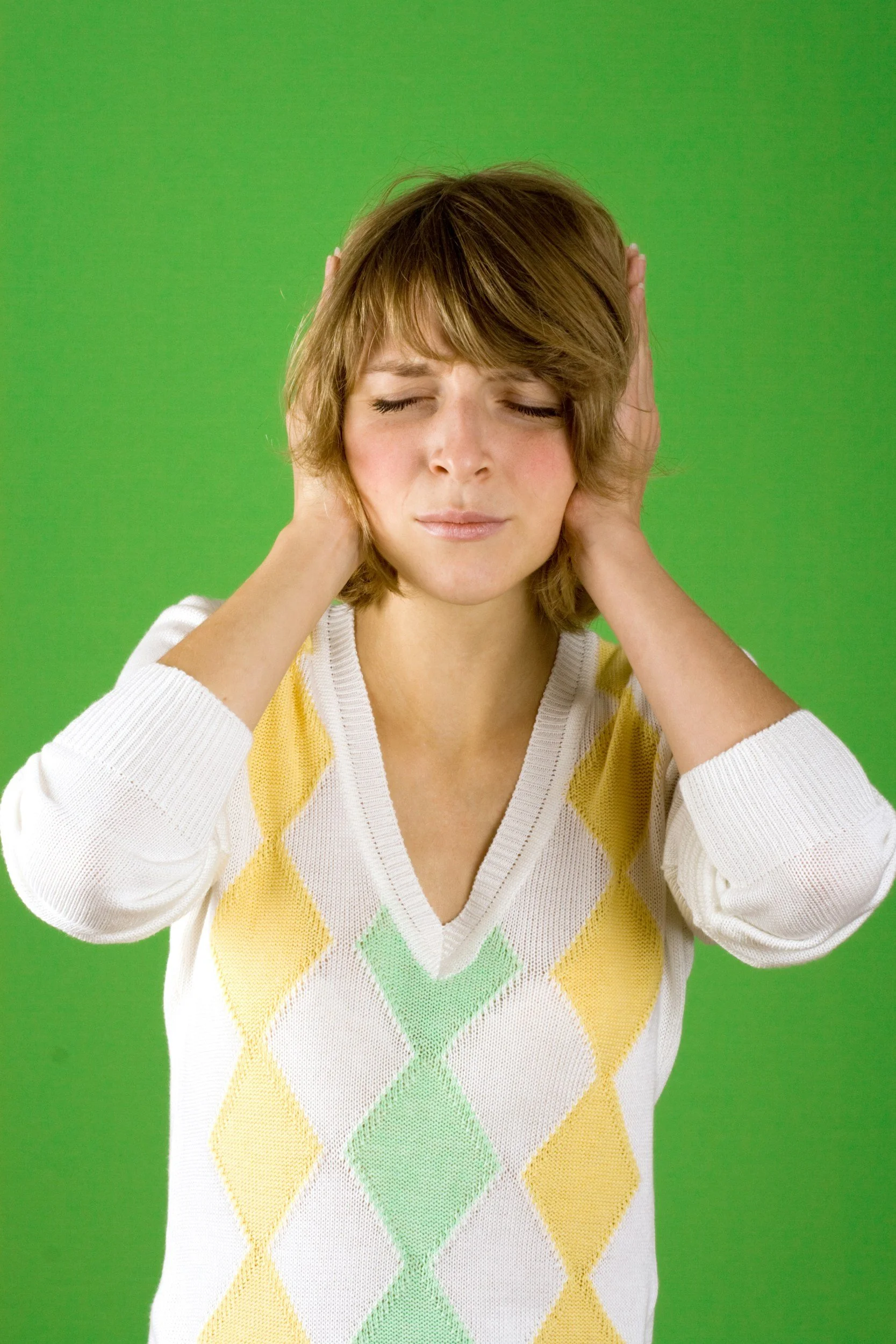
Is this even a real disorder?
Let’s talk about misophnoia: what it is, if it should be an official diagnosis, and how it is related to other anxiety-based disorders. So, the literal meaning of misophonia is “hatred of sound”; however, that doesn’t quite explain the experience one has. Misophonia results in abnormally strong reactions to patterns of sound, which vary for each person. They are often “human-produced” noises like chewing, slurping, throat clearing, nose whistling, mouth breathing, or sniffling, but sometimes can be pen clicking or other similar sounds. These triggers often result in disgust and sometimes anger and even verbal or physical aggression. The definition of misophonia has been up for debate from a clinical perspective, as the underlying causes and appearance of misophonia seem to vary significantly, and it has only really labeled and studied in the past 10-15 years. As such, misophonia is not currently in the ICD11 or DSM-5. It was ultimately not included in DSM-5 because of lack of consensus on it being its own disorder and the criteria. Potential proposed criteria of misophonia include: the presence or anticipation of human-produced sound causing an impulsive and aversive reaction with irritation or disgust and anger, loss of self-control, where the person recognizes their anger/disgust is unreasonable, the person tends to avoid situations with these sounds, and these sounds cause the person distress or interference in their daily life.
Here’s what we do know. Misophonia is not a hearing disorder. As of now, misophonia is largely considered a psychiatric as opposed to a medical or audiological disorder. It is somewhat related to two other disorders: phonophobia (fear of sounds, sometimes present in ADHD and ASD) and hyperacusis (intense hearing, common in ASD), as there is some symptom overlap and some children can have more than one of these disorders; however, all 3 of these disorders have different treatments, often by different professionals. Misophonia is different from phonophobia because children with phonophobia can generally tolerate loud sounds, while in misophonia children are not afraid or fearful, but rather angry and irritable (more related to the quality of sound as opposed to volume of a sound). The estimated clinical prevalence of misphonia is between 2 and 5%, with 12-14% being affected within the general population. Some people may experience misophonia “subclinically”, as it does not significantly affect relationships, work, or school, but still is present in their lives. Misophonia often develops in late childhood or early adolescence and tends to be diagnosed alongside anxiety, depression, OCD, PTSD, ADHD, Tourette’s Syndrome, panic disorder, agoraphobia, and anorexia as those within these populations tend to experience “anxiety sensitivity” and fear of losing control.
So what happens within the body when someone has misophonic response? When presented with the triggering sound, the body has an autonomic response (lack of thought, just like an innate response) to “innocuous” (i.e., harmless) auditory stimuli. As a result, the heart rate increases and skin temperature changes as part of a sympathetic nervous system reaction (i.e., fight/flight response). Within the brain, studies have shown altered connectivity and activation in frontal and limbic areas, which are parts of the brain associated with evaluating risk, autonomic activation, experiencing “social pain”, decision-making, feelings of anger or disgust, and emotional processing. Specifc areas of the brain affected are thought to include: the left amygdala, the anterior insula cortex, and the prefrontal cortex.
There has been some recent discussion surrounding the link or overlap between misophonia and OCD. Some feel misophonia should fall on the OCD spectrum, while others do not feel there is enough research to back up that claim, in terms of etiology and presentation. While there is a notable overlap, that is ~20% of those with with misophonia also have OCD, anxiety, and/or depression, and ~3-11% of individuals diagnosed with misophnoia also met criteria for OCD, the underlying mechanisms are not always so consistent. The neuronanatomy and neurochemistry of the two disorders do overlap somewhat in terms of prefrontal cortex, insula, amygdala, and ACC involvement, and abnormalities in the serotoninergic system (both potentially benefitting from SSRIs). The overlap between OCD and misophonia pertains to the avoidance and disgust in response to something toxic and/or harmful, especially in terms of contamination fears, and both can involve preoccupations/rumination about a specific fear or contaminant. The higher the level of hyper vigilance, the lower the threshold to aversive response to triggering sounds resulting in a “physical alarm” of sorts within the body. Both populations tend to score higher on levels of neuroticism/anxiety and internalized anger scores. Moreover, there were minimal differences in executive functioning profiles (attention, cognitive flexibility, response inhibition, and problem-solving), between those with OCD and misophonia. Both OCD and miso have been found to benefit from mindfulness and acceptance-based therapies.
Despite this similarities, there are also some significant differences between the two. In OCD, compulsions are aimed to reduce anxiety and typically do not have aggressive or anger-driven impulses. In general, irritation and rage are generally not part of OCD. Exposure and response prevention (ERP) may be effective for both OCD and misophonia, but may not be sufficient alone for misophonia. It is thought that misophonia generally results from behavioral conditioning as opposed to solely neurobiological difference, as it tends to be more triggered by known vs. unknown people, and the person is aware that the sound is not dangerous or threatening but still exhibit a reaction. These experiences are then associated with higher levels of anxiety and anger as well as judgment of the person’s own emotional states when reacting to aversive sounds. Some people feel a loss of self-control and cognitive dissonance (difference between how they feel and how they act) when they react to aversive sounds, as it affects engagement in goal-directed behavior. Because the sound is aversive, this can result in avoidance if there is anticipation of an unpleasant sounds/sensory experience, especially in certain settings and thus the child’s reaction likely maintains the response. If the person’s behavior changes in an obvious way, it can fresult in social difficulties, which then cause anxiety and further perpetuate the cycle.
Neuropsychological evaluation results generally reveal a profile consistent with ADHD/ASD/anxiety and general executive dysfunction (memory encoding, response inhibition, working memory, sustained attention), rather than a truly unique profile (secondary to overlap in diagnosis and similar brain structures). Misophonia may impair attention, learning, and memory if distracted or over-aroused by misophonia. Children with misophonia often have reduced cognitive flexibility (tend to react and respond to things the same way or have trouble seeing things from a new perspective) and reduced impulse control (difficulty controlling how they respond) as well as connection between neuroticism, emotional dysregulation, and sensory sensitivities. In terms of specific assessments for misophonia, there have been several developed in recent years including the: Amsterdam misophonia scale, misoquest, misophonia response scale, duke-vanderbilt misophonia screening questionnaire, misophonia activation scale, the sound disturbance problems form, the misophonia symptom list, and the Sussex misophonia scale for adolescents. Research is still being conducted to determined which are best for clinical use, but most have shown good preliminary evidence at differentiating between misophonia and hyperacusis and identifying misophonia overall.
So what does the research say about potential effective treatments or interventions for misophonia? Studies have supported mindfulness, acceptance and commitment, DBT for anger/tolerating triggers, CBT for anxiety/negative appraisal, and possibly tinnitus retraining therapy (TRT, administered by audiologists). Sound therapy has also been suggested in an effort to replace a negative association to a particular sound with a positive association, via reconditioning, but this does require additional research to confirm its efficacy. Other professionals feel that sound therapy more effective if comorbid hyperacusis is present. Some children also benefit from reconditioning via noise cancelling headphones or other similar auditory masking devices (air buds, loop, etc.). A combination of counseling and sound therapy is generally recommended, and some have also benefitted from antidepressants or anxiolytics because of co-occurring depression or anxiety. More recently, some clinicians/researchers have suspected there may be benefit from iTBS (intermittent theta burst stimulation), which is essentially a quicker form of TMS, as it may be helpful to adjust activation of certain areas because of the strong link between misophonia and depression/anxiety, though this research has not been evaluated at this time.